ForceBeyond Logo
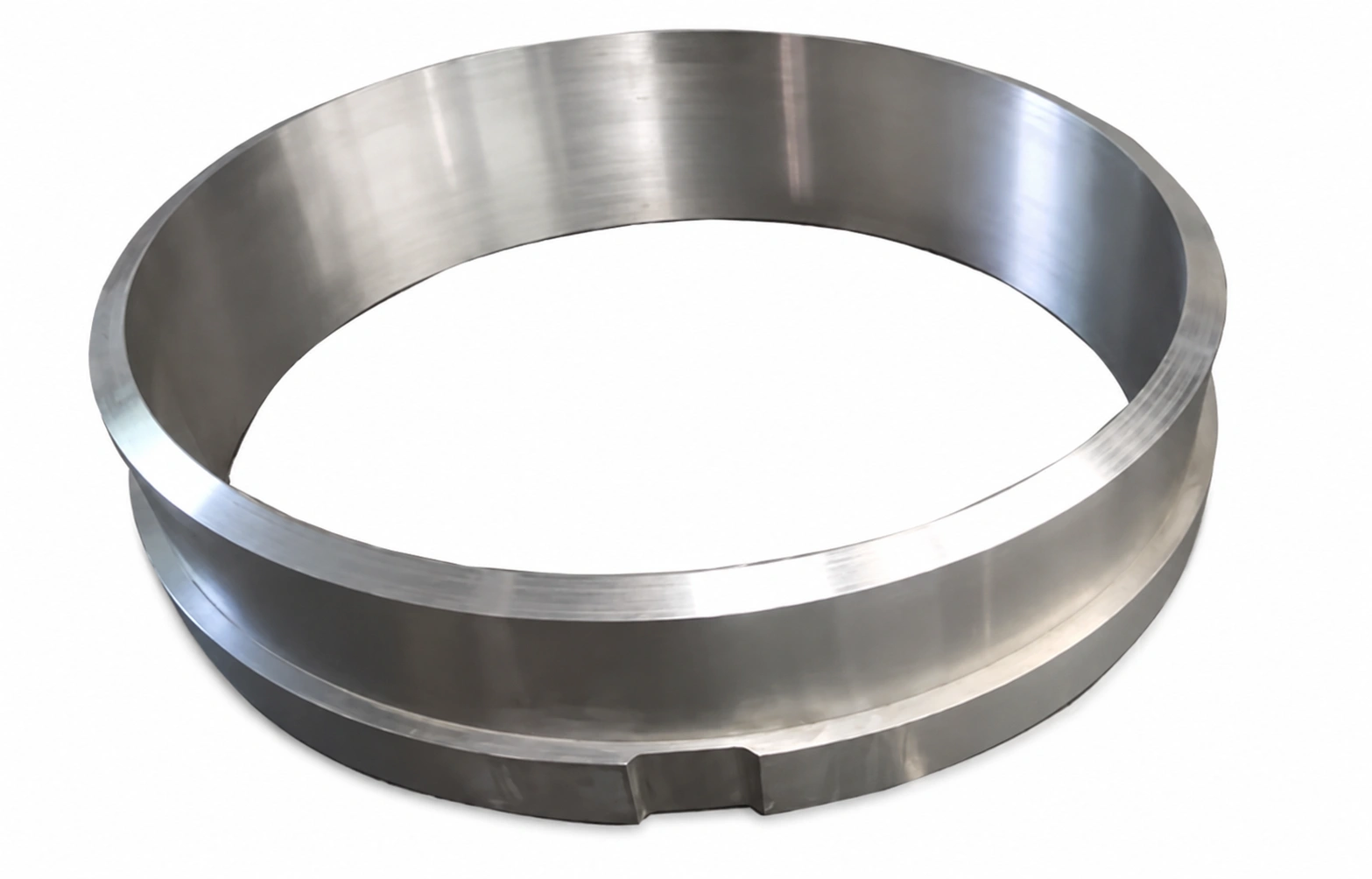
Precision forged Inconel 625 component

Inconel 625 Forging: Superior Corrosion & Fatigue Resistance

Inconel 625 Forging Key Facts: Inconel 625 (UNS N06625 / W.Nr. 2.4856) is a nickel-chromium-molybdenum-niobium alloy used where corrosion resistance, fabricability, and mechanical performance across a broad temperature range are important. ForceBeyond supports open-die, closed-die, and rolled-ring forging routes with secondary heat treatment, NDT, and precision machining where required by the drawing and purchase specification.

Inconel 625 Forging: Superior Corrosion & Fatigue Resistance

High-precision forged Inconel 625 (UNS N06625) for marine, nuclear, chemical-processing, aerospace, and other corrosion-critical applications. ForceBeyond provides AS9100-based quality-system oversight across its USA, South Korea, and Taiwan manufacturing network, with final product acceptance governed by the applicable drawing, material specification, inspection plan, and customer requirements.

As a specialized component of our Superalloy Forging Services, ForceBeyond provides precision-engineered Inconel 625 (UNS N06625) forgings. Compared with age-hardenable Inconel 718, Alloy 625 is commonly considered when corrosion resistance and solid-solution strengthening are central to the design. Forging can refine the wrought structure and place material closer to the final geometry, while final fatigue, corrosion, and high-temperature performance remain dependent on product form, heat treatment, section size, processing history, and service conditions.

Inconel 625 Precision Forged Component

Tier-1.5 Integration: Forging for Severe Environments

ForceBeyond provides a seamless transition from raw Inconel 625 Forging to precision Inconel 625 Machining. Unlike age-hardenable Inconel 718, which is commonly selected where high mechanical strength is a primary requirement, Inconel 625 is frequently selected for components exposed to aggressive chloride, marine, and chemical-processing environments. Forging provides the wrought structure and near-net geometry, while corrosion performance is governed primarily by alloy chemistry, material condition, processing history, and service environment.

By coordinating forging reduction, thermal processing, machining, and inspection across our USA, South Korea, and Taiwan manufacturing network, ForceBeyond can review the production route as one integrated sourcing package. Material condition and final acceptance are controlled to the governing specification and customer requirements rather than assumed from alloy grade alone.

While a controlled forging process can support a dense wrought structure and favorable material flow, final fatigue performance depends on alloy condition, grain structure, defects, surface condition, heat treatment, geometry, residual stress, and service environment. Components with highly complex internal passages or thin-walled housings may be better suited for our Inconel 625 Casting solutions.
Why Forged Inconel 625?

Inconel 625 is a nickel-chromium-molybdenum alloy strengthened primarily by molybdenum and niobium in a nickel-chromium matrix. Forging is often considered when the component benefits from a wrought structure, controlled material flow, reduced machining stock, or a near-net preform. For highly complex internal passages or thin-wall geometries, Inconel 625 casting may provide a more suitable manufacturing route.

The Performance Advantage

  • Corrosion Resistance: Alloy 625 is widely used in seawater, chloride-bearing, and chemical-processing environments where resistance to localized and general corrosion is important.
  • Broad Temperature Capability: Alloy 625 is used across cryogenic and elevated-temperature applications; allowable design temperature depends on the product form, code, loading, environment, and governing material specification.
  • Engineering Versatility: Its combination of corrosion resistance, weldability, and wrought-product availability supports marine, chemical-processing, aerospace, power-generation, and pressure-containing applications.

Inconel 625 Technical Specification Data

Inconel 625 is identified as UNS N06625 / W.Nr. 2.4856. SAE AMS 5666K covers the alloy in bars, forgings, extrusions, rings, and forging stock, while ASTM B564 covers applicable nickel-alloy forgings including UNS N06625. The drawing, purchase order, specified revision, heat treatment, dimensions, and acceptance criteria remain controlling.

Alloy Designation & Reference Chemistry
Technical Item Reference Value / Range
Alloy designation UNS N06625 / W.Nr. 2.4856 / AMS 5666
Nickel 58% minimum
Chromium 20–23%
Molybdenum 8–10%
Niobium + tantalum 3.15–4.15%
Iron 5% maximum

Chemistry values above are alloy-level reference ranges. Final heat chemistry must satisfy the material specification and revision invoked by the customer.

Typical Mechanical Properties — Forged & Annealed Reference

Property Typical Reference Value
Tensile strength ~930 MPa (135 ksi)
Yield strength, 0.2% offset ~517 MPa (75 ksi)
Elongation ~30–42.5%
Elevated-temperature reference Applications may extend to approximately 980°C (1,800°F), subject to product form, loading, environment, code requirements, and specification limits.

These mechanical values are provided as engineering reference data rather than guaranteed minimum acceptance properties. Required tensile, yield, elongation, hardness, corrosion, or elevated-temperature properties should be defined by the applicable material specification, drawing, and purchase order.

Common Specification References

  • AMS 5666: Nickel Alloy 625 bars, forgings, extrusions, rings, and stock for forgings/extrusions/rings.
  • ASTM B564 / ASME SB-564: Nickel-alloy forgings, where invoked by the applicable industrial or pressure-equipment specification.
  • ASTM B446: Nickel-chromium-molybdenum-columbium alloy rod and bar; useful when the sourcing route is wrought bar rather than a shaped forging.
  • NACE MR0175 / ISO 15156: May apply to oil-and-gas sour-service applications when specifically required.

Inconel 625 Forging Methods & Manufacturing Capabilities

Process selection is reviewed against part geometry, section thickness, forging reduction, production quantity, machining allowance, inspection requirements, and the customer specification. ForceBeyond's current page describes the following manufacturing routes:

Forging Types

  • Open-Die Forging: For shafts, blocks, hubs, large preforms, prototypes, and lower-volume geometries where flexible tooling and controlled forging reduction are useful.
  • Closed-Die Forging: For repeatable near-net preforms such as valve bodies, manifolds, aerospace hardware, and other components where material utilization and consistent geometry are important.
  • Seamless Rolled Rings: For corrosion-resistant rings, flanges, casings, pressure-boundary components, and rotating or structural ring geometries. The current page states ring capability up to 3,500 mm OD, subject to section size and DFM review.

Post-Forging & Finish Processing

  • Solution Annealing / Thermal Processing: Heat-treatment route reviewed to the invoked material specification and required final material condition.
  • Grain-Structure & Process Control: Forging reduction and thermal history are planned to support the required wrought structure; exact acceptance requirements depend on the applicable specification.
  • NDT Suite: Ultrasonic testing, penetrant examination, dimensional inspection, and other methods can be incorporated where required by the drawing or inspection plan.
  • 5-Axis CNC Machining: Integrated machining can take a forged preform through rough machining, datum establishment, finish machining, and final dimensional verification where applicable.
  • Traceability & Documentation: Heat-lot identity, material certificates, process records, NDT documentation, and inspection reports can be coordinated according to customer and industry requirements.

Key Applications for Forged 625

  • Nuclear & SMR: Heat exchangers, corrosion-resistant process hardware, and selected nuclear or SMR components where Inconel 625 is permitted by the applicable code, material specification, service environment, and customer requirements.
  • Marine & Subsea: Propeller blades, exhaust systems, and high-pressure subsea valve stems.
  • Chemical Processing: Tubing, flare stacks, and reaction vessels handling highly corrosive acids.
  • Aerospace: Engine exhaust systems and fuel line bellows.

Quality Assurance & NDT Suite

Inspection planning for Inconel 625 forgings is matched to the drawing, specification, critical features, and customer acceptance criteria. Available quality controls described on this page include:

  • Ultrasonic Testing (UT): Volumetric examination can be specified to evaluate internal discontinuities where required by the applicable acceptance standard.
  • Liquid Penetrant Inspection (LPI/FPI): Surface examination for discontinuities open to the surface, applied where required by the inspection plan.
  • Corrosion Testing: ASTM G28 or other corrosion-testing requirements can be reviewed when invoked by the customer specification; results are interpreted against the specified acceptance criteria.
  • Full Traceability: Complete heat-lot documentation and certification for critical installations.

FAQ: Sourcing Inconel 625 Forgings

When should I choose Inconel 625 over Inconel 718 for a forging?

Inconel 625 is generally selected when corrosion and oxidation resistance in aggressive environments such as seawater, chloride service, or chemical processing are primary design considerations. Inconel 718 is generally selected when higher mechanical strength and age-hardened performance are more important. Final alloy selection should follow the component loading, environment, temperature, and governing specification.

What are the primary advantages of forging Inconel 625 versus machining from bar stock?

Forging can place material closer to the required component geometry, reduce machining stock, and develop a worked grain structure that may be beneficial for fatigue-sensitive or pressure-containing components. Machining from bar can still be appropriate for low-volume, simpler geometries, prototypes, or parts where tooling is not justified.

What industry standards can apply to ForceBeyond Inconel 625 forgings?

Common references for wrought Inconel 625 include AMS 5666 for bars, forgings, extrusions, rings, and forging stock, and ASTM B564 / ASME SB-564 for applicable nickel-alloy forgings. Customer drawings, purchase orders, heat-treatment requirements, NDT acceptance criteria, and the specified revision govern final compliance.

What forging methods are available for Inconel 625 components?

ForceBeyond describes Inconel 625 capability across open-die forging, closed-die forging, and seamless rolled-ring forging. Process selection depends on geometry, section size, quantity, machining allowance, grain-flow objectives, and inspection requirements.

How does ForceBeyond manage the global supply of Inconel 625?

ForceBeyond maintains strategic billet inventory across its US and Asian hubs. This tri-regional supply model can help reduce exposure to extended mill lead times. The current page states typical delivery of approximately 12–16 weeks, subject to billet availability, forging route, geometry, quantity, heat treatment, inspection requirements, and customer specifications.

Request an Inconel 625 Technical Consultation

Typical response time: 48 hours for full technical and feasibility review.

Authoritative Technical Sources

Authoritative Technical Sources

Expand this section to review the external standards, technical organizations, and reference materials used for this page.

Related ForceBeyond Superalloy & Forging Resources