ForceBeyond Logo
Titanium aerospace jet engine undergoing a high-performance ground test with active exhaust

Titanium Aerospace Forging: AS9100-Certified Mission Critical Components

Titanium Aerospace Forging: AS9100-Certified Mission Critical Components

As a specialized capability within our Titanium Forging Services , ForceBeyond provides high-performance titanium aerospace forgings for flight-critical propulsion and structural systems. Leveraging our co-owned manufacturing network in the USA, South Korea, and Taiwan, we support aerospace titanium forging programs to applicable material specifications such as AMS 4928 for Ti-6Al-4V, with legacy military specifications reviewed where specifically invoked by customer requirements.

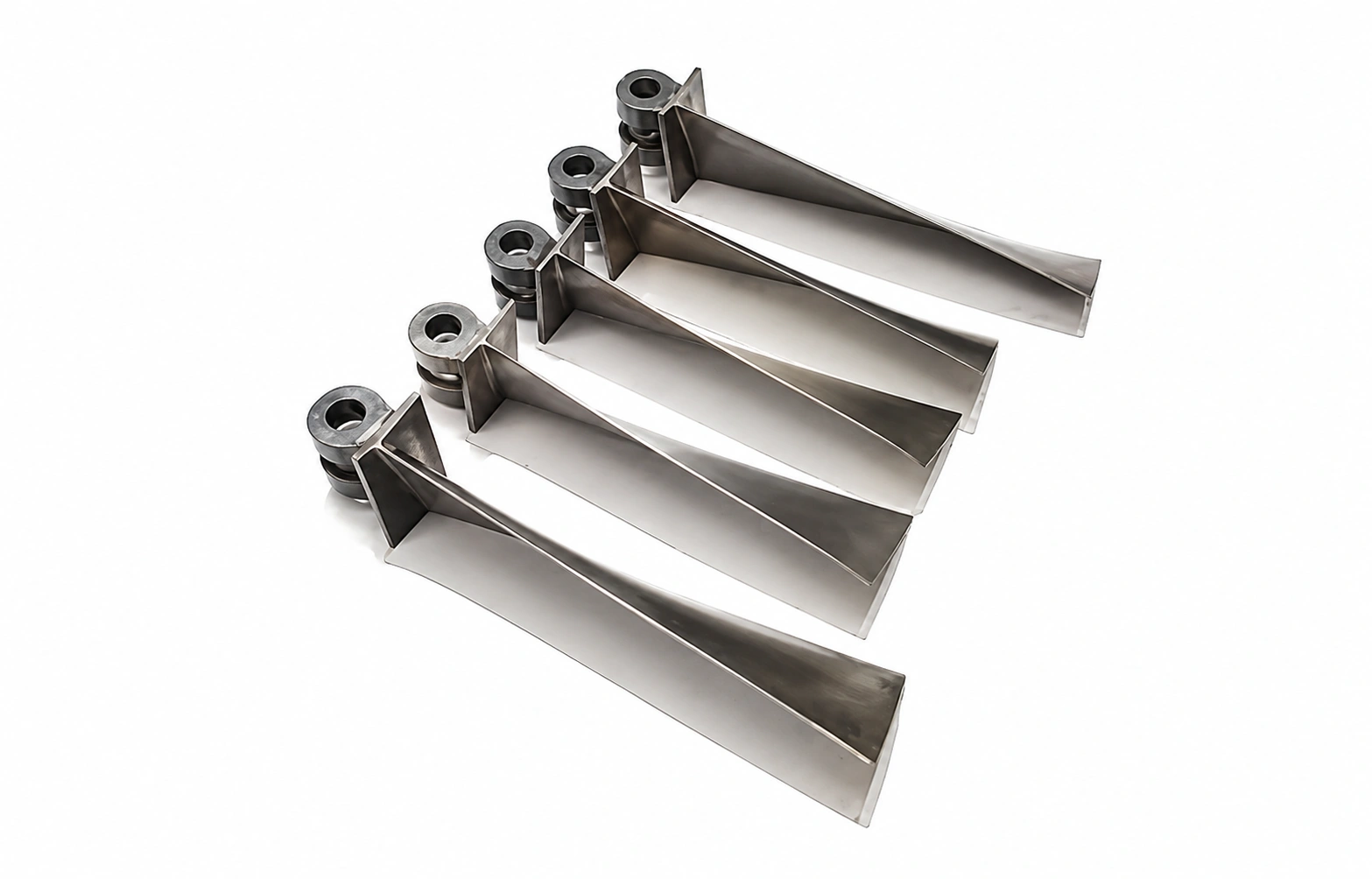
Precision-machined titanium jet engine turbine blades for aerospace aircraft applications on a white background

Aerospace Component Specialization

We manage the “Forge-to-Finish” cycle for the industry’s most demanding geometries. Because we co-own and operate our facilities, we ensure total traceability from the melt to the final 5-axis CNC inspection.

  • Propulsion Systems:Jet engine compressor disks, Titanium Turbine Blades, and fan hubs.
  • Structural Airframes: Wing spars, bulkheads, engine mounts, and pylon ribs.
  • Actuation & Flight Control: Hydraulic cylinders, torque tubes, and specialized aerospace fasteners.

Technical Authority: Metallurgical Grain Flow Optimization

Unlike standard machining, our forging process realigns the internal grain structure of the titanium to follow the contours of the part. This results in superior mechanical properties:

  • Fracture Toughness:Enhanced resistance to crack propagation in high-vibration environments.
  • Fatigue Life: Extended component lifespan by eliminating the “end-grain” weaknesses found in machined-from-plate parts.
  • Yield Strength:Targeted grain refinement during the forging strike increases the material’s ability to withstand peak loads.

Titanium Aerospace Standards & Specifications

Our co-owned facilities coordinate quality-system controls to meet the specifications, customer requirements, and facility certification scope applicable to each aerospace program.

Alloy Grade Standard Primary Application Key Property
Ti-6Al-4V AMS 4928 Structural Airframes High strength-to-weight ratio.
Ti-6Al-4V ELI ASTM F136 Life-support / Medical High purity and damage tolerance.
Ti-6Al-2Sn-4Zr-2Mo AMS 4976 Forgings / Forging Stock Elevated-temperature aerospace applications
Ti-10V-2Fe-3Al AMS 4983 Landing Gear Ultra-high fracture toughness.

The Tier-1.5 Integrated Advantage

ForceBeyond eliminates the “Hand-off Risk” between the forge and the machine shop. By interlinking our primary manufacturing processes, we provide a more resilient supply chain.

Integrated Finishing: Aerospace Titanium Machining

Where finish machining is required, forged preforms can transition to our specialized Aerospace Titanium Machining centers for datum establishment, rough machining, finish machining, and dimensional verification. Tight-tolerance features are reviewed according to part geometry, feature size, material condition, surface-finish requirements, inspection capability, and the customer drawing.

Design Alternative: Titanium Aerospace Casting

For complex aerospace geometries such as turbine housings or bleed-air valves where forging dies are cost-prohibitive, our AS9100-certified casting hub provides a high-purity, near-net-shape alternative.

Logistics & Compliance

  • Certification:AS9100 Rev D, ISO 9001:2015, and ITAR compliance for defense-sensitive projects.
  • Lead Times:14–18 weeks for integrated Forge-to-Finish cycles (60% faster than the industry average).
  • Testing:In-house ultrasonic (UT), fluorescent penetrant (FPI), and radiographic inspection.

RFQ: Titanium Aerospace Forging

Optimize your “Buy-to-Fly” ratio with ForceBeyond’s operational oversight.

When requesting a quote for aerospace components, please provide:

  • Material Spec (e.g., AMS 4928)
  • Nondestructive Testing (NDT) Requirements
  • Critical Stress Axis Data(for grain flow optimization)
  • Estimated Annual Usage (EAU)

Frequently Asked Questions: Aerospace Titanium Forging

Why is forged titanium often preferred over machined-from-plate material for aerospace structural components?

Forging can develop material flow that follows the component geometry and primary loading directions, while a part machined from plate or bar retains the grain orientation of the original wrought stock. For appropriately designed components, this can provide advantages in fatigue resistance, fracture performance, and structural reliability. Actual performance depends on alloy, stock orientation, forging reduction, heat treatment, geometry, surface condition, and service loading.

What aerospace material specifications can apply to titanium forgings?

For Ti-6Al-4V forgings, AMS 4928 is a common aerospace material specification. Other specifications may apply depending on alloy, product form, heat-treatment condition, section size, and customer requirements. Legacy specifications such as MIL-T-9047 or SAE AMS-T-9047 should only be applied when specifically invoked by the drawing, contract, or purchase order. The specified revision and customer acceptance criteria remain controlling.

How does the Tier-1.5 model reduce aerospace lead times?

Traditional aerospace supply chains are fragmented between a forge, a heat-treater, and a machine shop. ForceBeyond’s Tier-1.5 model integrates these steps under a single AS9100 oversight system. By managing the “Forge-to-Finish” cycle in-house, we reduce average lead times from 40+ weeks to 14–18 weeks.

Do you offer Nondestructive Testing (NDT) for flight-critical parts?

Absolutely. Our co-owned manufacturing facilities are equipped for in-house Ultrasonic Testing (UT), Fluorescent Penetrant Inspection (FPI), and other applicable NDT methods can be incorporated to evaluate flight-critical forgings according to customer-defined inspection and acceptance requirements.

What is the maximum size for your seamless rolled rings?

Our aerospace lines can produce seamless rolled titanium rings up to 84 inches (2,133 mm) in outer diameter, subject to alloy, cross-section, ring geometry, equipment availability and DFM review, ideal for jet engine cases, combustion liners, and large structural seals.

Sources
Our Internal Resources for Die Casting, Investment casting, Forging and Sand Casting

Our Internal Resources for Die Casting, Investment casting, Forging and Sand Casting

Explore related ForceBeyond material, process, quality, industry, and manufacturing resources.